What Is a Meme Coin and How Do Traders Actually Make Money on It?
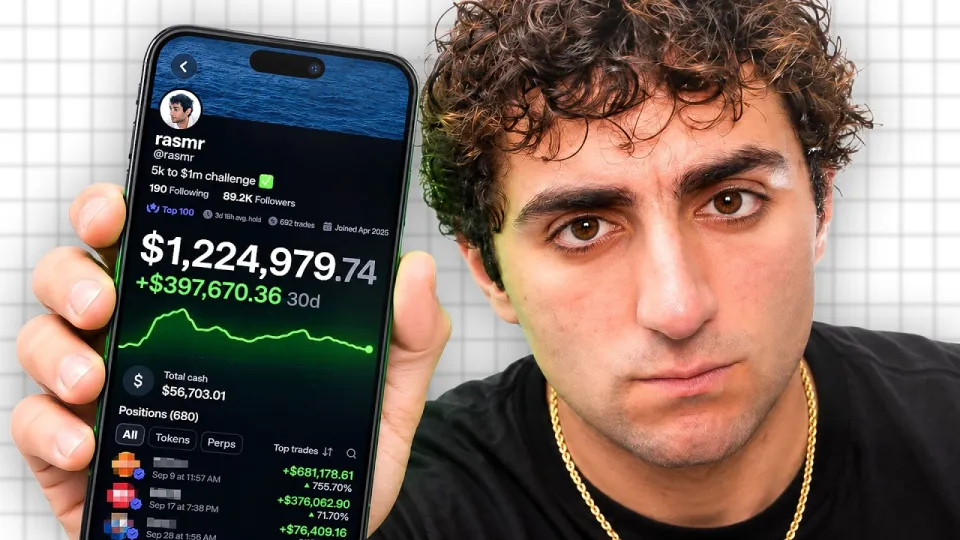
Video: 5 Years of Memecoin Knowledge in 12 Minutes
Want articles like this for your own video to promote it on YouTube and Google? Order them through the Telegram bot @sat_sit_bot. Articles with your video embedded are written and posted by the bot itself — on popular topical sites (no ads). Your first 50 articles are free.
· based on the channel rasmr
A meme coin is a cryptocurrency whose price is driven by narrative, community and attention rather than by revenue, cash flow or a working product. Traders make money on it by getting in early on a strong story and selling into the liquidity that the crowd provides later, which means the skill is less about picking a coin and more about planning the exit before the entry. Everything else — the chart, the ticker, the memes — is packaging around that single mechanic.
The rasmr video "5 Years of Memecoin Knowledge in 12 Minutes" compresses that experience into a short brief, and the channel's trading community is reachable through the fomo registration link that the author shares with viewers.
What actually gives a meme coin its price
A meme coin has no intrinsic valuation model, so price is set by the balance of new buyers against sellers at any moment. Because most of the supply usually sits with the deployer, early wallets and a small connected group around the launch, the float available to the public is thin. That is why a token can move hundreds of percent on a few thousand dollars of buying, and why the same token can collapse just as fast when those early wallets decide to distribute.
Three forces do most of the work:
- Narrative. A recognizable story — an animal, a political figure, a cultural moment, a game release — gives strangers a reason to buy without reading a whitepaper.
- Distribution. Who holds the supply and at what average price determines how much selling pressure appears at each market cap level.
- Attention flow. Social feeds, group chats and streamers route new money; when attention stops growing, the buyer pool stops growing with it.
Understanding who released the token and why is the part most beginners skip, and it is exactly the part that determines whether the chart has room to run.
How the launch funnel works before you see the chart
Most meme coin launches are announced to a private group before any public trading begins, which means the earliest entries are already filled by the time a token appears on a screener. This is not a conspiracy theory so much as a structural fact: someone has to seed liquidity, and that someone usually tells their own circle first. The practical consequence for a retail trader is that the first green candles you see are not an opportunity to be early — they are the moment you become the exit liquidity for someone who was earlier.
That does not make every launch a scam. It does mean you should assume you are late by default and price your expectations accordingly. If a token has already repriced several times before it reaches your feed, the remaining upside is smaller and the downside is closer.
Where traders actually take profit
Profitable memecoin trading is mostly an exercise in selling, not buying. Experienced traders set market cap milestones in advance — for example, planning to sell a third of the position at one level, another third at the next, and letting the remainder run — so the decision is made before the adrenaline arrives. The alternative, deciding in real time while the chart is moving, is where most of the damage happens.
A workable exit framework looks like this:
- Define the invalidation point first: the market cap or price at which the thesis is simply wrong.
- Define at least two profit levels before entering, based on where previous launches in the same category stalled.
- Size the position so that a total loss does not change your month, because a large share of these tokens do go to near zero.
- Write the plan down. A plan held only in memory gets renegotiated by emotion within minutes.
Liquidity is the other half of the exit question. A position that looks large on paper can be impossible to sell without moving the price, so thin pools demand smaller size and earlier selling.
The mistakes that cost the most money
Emotion is the single most cited cause of losses among memecoin traders, and the failure patterns repeat with almost mechanical regularity. The most common one is holding a large open profit and never selling, watching a five-figure gain round-trip back to the entry price because the chart "looked strong." The second is refusing to accept a loss and instead buying more into a falling token, converting a small mistake into a large one. The third is chasing a candle that has already gone vertical, entering at the top of a move that had no buyers left above it.
Greed and hope are not character flaws here; they are predictable responses to fast money. The fix is procedural rather than psychological: pre-set exits, fixed position sizes, and a hard rule against adding to a losing position. Traders who survive multiple cycles tend to be the ones who treat each token as a lottery ticket with a defined cost, not as a conviction bet.
Questions traders ask before their first position
Beginners tend to worry about the same handful of things, and the answers are more practical than philosophical.
"How do I know a coin will rug?" You cannot know with certainty, but you can price the risk: check how concentrated the supply is, whether liquidity is locked, how old the deployer wallet is, and whether the token was announced publicly or quietly distributed first. High concentration plus unlocked liquidity is the classic profile.
"Should I start with a large or small account?" Small. The first several months are tuition, and the lessons cost the same whether the position is $50 or $5,000 — only the invoice differs.
"Is a token tied to a big upcoming release a good investment?" A recognizable name such as a major game launch can produce a strong narrative, but the token still follows the same distribution rules. The story attracts buyers; it does not protect you from insiders selling into them.
"How much of my portfolio should be in memecoins?" Treat the whole category as a speculative sleeve you can afford to lose entirely, separate from any longer-term holdings.
Useful links
- fomo registration via rasmr — the trading platform link shared in the video.
- Catalyst trading group on Discord — the community where launches and setups are discussed live.
Bottom line
A meme coin is a narrative asset, and trading it successfully is a discipline problem dressed up as a gambling problem. The edge does not come from finding the next token before anyone else; it comes from knowing who holds the supply, sizing positions so losses stay survivable, and selling on a plan instead of a feeling. The rasmr breakdown is a compact primer on exactly that mindset, distilled from five years of watching the same patterns repeat across cycles. If you take one thing from it, take the exit plan — because in this market the buyers who sell are the ones who keep their money.
Key takeaways
- A meme coin is a token whose value rests on narrative, community and attention rather than on cash flow or product revenue.
- Most supply is concentrated in the hands of insiders and early wallets, so the launch price is set by a small circle before the public can buy.
- Exit planning matters more than entry: profit targets are usually defined by market cap milestones, not by chart shapes.
- Emotional trading — averaging into a loss, round-tripping an open profit, chasing a green candle — is the most frequently reported way traders lose money.
- The rasmr breakdown packs five years of memecoin experience into a 12-minute video and points viewers to a trading community for live discussion.
Source: 5 Years of Memecoin Knowledge in 12 Minutes · Markdown version
Questions & answers
What exactly is a meme coin?
It is a cryptocurrency whose value comes from community, narrative and attention rather than revenue or product usage. There is no cash flow to model, so price is set purely by the balance of buyers and sellers at any given moment.
Can you actually make money trading meme coins?
Yes, but the profit comes from selling into crowd liquidity, not from holding long term. Traders who set market cap targets and position sizes in advance keep more of their gains than those who decide in the moment.
How do I spot a token that is likely to rug?
Look at supply concentration, whether liquidity is locked, and how the token was distributed before it appeared publicly. A launch quietly handed to a small circle plus unlocked liquidity is the classic high-risk profile.
Why do so many traders lose despite being in profit at some point?
Because they never sell. Open gains round-trip when a position is held through a reversal, and losses compound when traders add to a falling token instead of accepting the invalidation point.